
What to Do When Insurance Denies Care as 'Not Medically Necessary'
What to Do When Insurance Denies Care as "Not Medically Necessary"
Overview
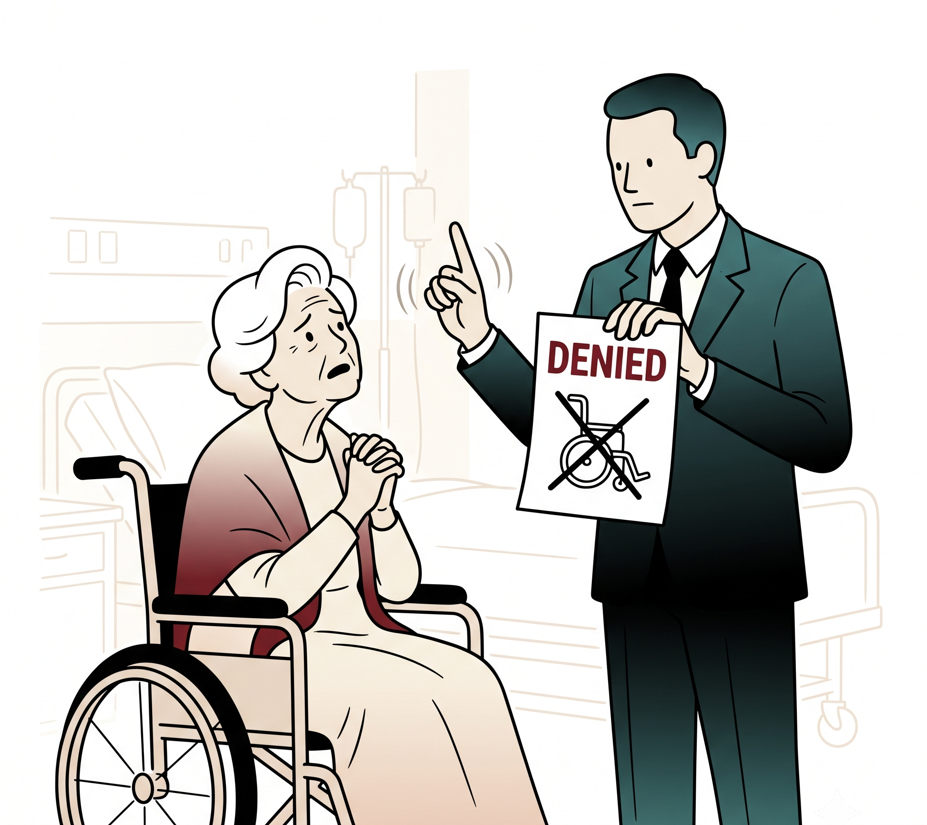
You’ve had the tests. You and your doctor have thoroughly discussed the options. You finally have a treatment plan for your condition. But then the letter arrives from your health insurance company: Claim Denied. Reason: Not Medically Necessary.
This is the single most common—and most infuriating—excuse insurance companies use to avoid paying for expensive procedures, surgeries, and prescription medications. If your health insurer has overridden your treating doctor’s medical consensus and refused to pay for vital care, you are not alone—and you have a right to aggressively challenge their decision - please contact us ASAP..
When an insurance company claims a treatment is "not medically necessary," it sounds like an objective, scientific fact. In reality, it is a highly contestable opinion often generated by a computer algorithm or a corporate doctor who has never examined you. Insurers bank on patients feeling too overwhelmed to question this medical-sounding jargon.
The good news? You can beat these denials by exposing the flaws in their review process and leveraging hard clinical evidence.
WAS YOUR CLAIM DENIED? If your health insurance company refused to pay for a prescribed treatment, surgery, or medication, you have a limited window of time to fight back. Click here to talk with an attorney today.
The "Not Medically Necessary" Trap Explained
How can an insurance company over 1,000 miles away decide that the surgery your local specialist recommended isn't necessary? They do it by relying on two cost-saving tools:
- Flawed Algorithmic Software: Many major insurers use proprietary software programs to instantly batch-deny claims that don't fit perfectly into a predetermined, cost-effective box. They look at your diagnosis code and standard treatment pathways, immediately rejecting anything that is newer, more complex, or more expensive than the baseline.
- Third-Party Medical Reviewers: If your claim gets a human review, it is often conducted by a physician employed by the insurance company. Shockingly, this "peer reviewer" is frequently a general practitioner with no specialized training in your specific disease or condition.
Under the guise of "medical necessity," insurers are often practicing medicine without a license, prioritizing their profit margins over your health outcomes.
How to Dismantle the Insurer's Justification
To win your appeal, you cannot just argue that you really need the treatment; you must clinically and legally dismantle their denial.
- Demand the Reviewer’s File: Under federal and state law, you have the right to request your complete claim file. Demand the specific clinical guidelines the insurer used to deny your claim, as well as the name and specialty of the doctor who reviewed it. If a pediatrician denied your complex neurological surgery, you can immediately highlight that lack of expertise in your appeal.
- Leverage Peer-Reviewed Journals: Insurers often deny newer, highly effective treatments by claiming they are not the "standard of care." You can defeat this by attaching recent articles from respected, peer-reviewed medical journals that prove the treatment's efficacy and widespread acceptance in the specialized medical community.
- Deploy Your Doctor’s Clinical Notes: Your treating physician's clinical notes are your sharpest weapon. Have your doctor write a detailed Letter of Medical Necessity that directly attacks the insurer's rationale. If the insurer claims you should try a cheaper drug first ("step therapy"), your doctor's notes should explicitly document why that cheaper alternative would be dangerous or ineffective for your specific biology.
Your Right to an Independent External Review
If the insurance company stubbornly upholds their internal denial, the fight is not over. Under the Illinois Health Carrier External Review Act (215 ILCS 180/1 et seq.), Illinois residents have the right to take the decision out of the insurance company's hands entirely.
You can request an External Review through the Illinois Department of Insurance. Your case will be handed over to an Independent Review Organization (IRO) and evaluated by a neutral, board-certified physician in the same specialty as your condition. The insurance company has to pay for this review, and if the independent doctor agrees that the care is medically necessary, the insurer is legally bound to cover it.
Speak to an Insurance Appeals Lawyer
Insurance companies purposely make the "medical necessity" appeals process intimidating, hoping you will give up and pay out of pocket. You do not have to fight this battle alone.
Click here to talk with an attorney today to share your experience with our legal team. We can help you secure your medical files, draft a legally robust appeal, and force the insurance company to honor the coverage you pay for.