
How to Report Grocery Store Overcharges in Illinois: A Step-by-Step Guide
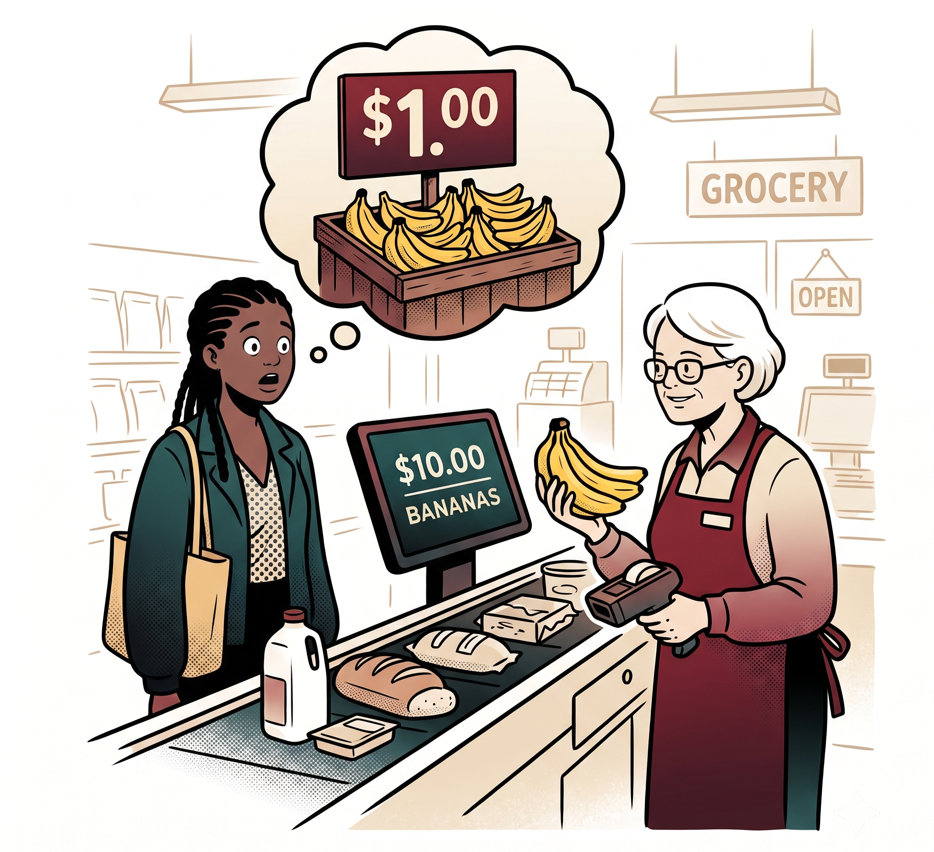
Table Of Contents
How to Report Grocery Store Overcharges in Illinois: A Step-by-Step Guide
Overview
You just finished bagging your groceries, and as the cashier hands you the receipt, you notice the total is much higher than you expected. That $1.99 sale item rang up at $4.99. When you ask why, you are told you didn't "clip" the digital coupon in their app—an app that wouldn't load because the store is a cellular dead zone.
If you have been forced to pay full price due to a malfunctioning app, misleading shelf tags, or a lack of smartphone access, you are not alone—and you may have been a victim of a deceptive retail practice - please contact us ASAP..
Bait-and-switch pricing and digital coupon traps are not just frustrating; in Illinois, they can be illegal. But holding major regional grocery chains accountable requires more than just leaving a bad review online. To stop these deceptive practices, consumers need to properly document the overcharges and report them to the right authorities.
Here is a step-by-step guide on how to build your case file and report grocery store overcharges in Illinois.
WERE YOU CHARGED FULL PRICE? If you were locked out of an advertised grocery discount because of a broken app, lack of smartphone access, or zero cellular signal inside an Illinois store, we want to hear from you. Click here to talk with an attorney today.
Step 1: Gather Critical Evidence Before Leaving the Store
The most important part of reporting consumer fraud is proving the discrepancy between what was advertised and what was charged. If you notice an overcharge, gather this evidence immediately:
- Save Your Physical Receipt: This is your primary proof of injury. It shows exactly what you paid, the date, the time, and the specific store location. Do not throw it away.
- Photograph the Shelf Tag: Walk back to the aisle and take a clear picture of the promotional sign or shelf tag. Ensure the photo captures the large advertised price and the tiny fine print (like "digital coupon required"). This proves the "net impression" the store was using to lure you into the purchase.
- Document the Digital Failure: If the app wouldn't load because of a dead zone, take a screenshot of your phone showing the "No Service" or loading error screen while standing in the store.
- Record the Store's Response: If you ask the cashier or manager to manually adjust the price because the app isn't working and they refuse, write down their name, their exact response, and the store policy they cite.
Step 2: File a Complaint with the Illinois Attorney General
The Illinois Attorney General's Consumer Protection Division is tasked with investigating systematic fraud and enforcing the Illinois Consumer Fraud and Deceptive Business Practices Act (ICFA).
Filing a formal complaint puts the business on the state's radar. Here is how to do it:
- Visit the Illinois Attorney General's Consumer Complaint page.
- Fill out the Consumer Complaint Form online or print it out to mail in.
- Provide a clear, factual narrative. State simply: "I saw an advertised price of [X]. At the register, I was charged [Y]. The store required a digital app for the discount, but their store lacks cellular service, making the discount impossible to obtain. The manager refused to override the price."
- Attach copies (not the originals) of your receipt and the photo of the shelf tag.
Step 3: Why Individual Reports Fuel Class Action Lawsuits
You might be wondering: Is it worth my time to report a $3.00 overcharge? The answer is absolutely yes.
Grocery stores rely on the fact that most people will not fight over a few dollars. But when a chain overcharges 10,000 customers a day by $3.00, it amounts to massive, unjust corporate profits. Under Illinois law, these minor individual losses can be aggregated into a class action lawsuit.
When consumers meticulously document their overcharges and step forward, it establishes a "pattern and practice" of deception. This is exactly the kind of evidence our firm uses to hold major corporations accountable and demand structural changes to their pricing systems.
Speak to a Chicago Consumer Fraud Lawyer
Retailers are legally obligated to make their advertised prices practically accessible. If you are tired of paying full price because of broken grocery apps and dead cell zones, you have a right to seek reimbursement and push for structural changes in how these stores operate.
Click here to talk with an attorney today to share your experience with our legal team and find out if you qualify as a potential class representative.