
How to Prove Bedsore Negligence in Illinois Nursing Homes
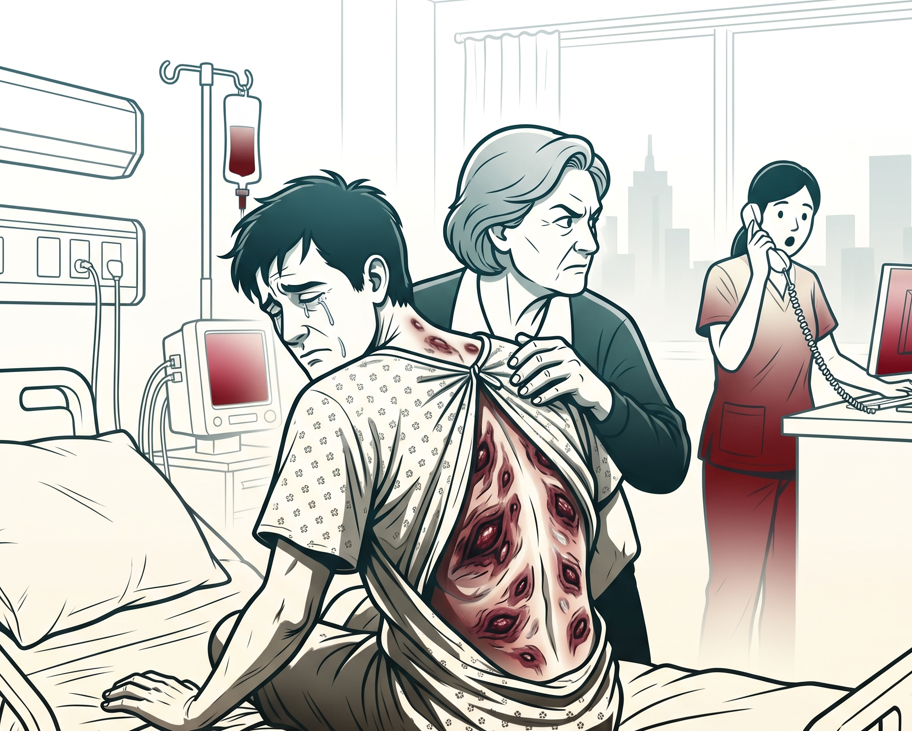
Table Of Contents
- How to Prove Bedsore Negligence in Illinois Nursing Homes
- Overview
- The Anatomy of a Bedsore
- Illinois Regulations on Turning and Repositioning Schedules
- How Chronic Understaffing Causes Ulcers
- Gathering Wound Care and CNA Flowsheet Records
- Calculating Damages and Settlement Values
- Speak to a Chicago Nursing Home Abuse Lawyer
How to Prove Bedsore Negligence in Illinois Nursing Homes
Overview
Finding out that your parent or spouse has developed a massive, deep wound while living in a skilled nursing facility is horrifying. Often, the facility's administrators will try to convince you that the wound was an "unavoidable" or "natural" part of the aging process. Do not let them mislead you. If you have discovered a severe pressure ulcer on a loved one and suspect they are the victim of a facility's neglect - please contact us ASAP..
In the medical and legal communities, severe bedsores—also known as pressure ulcers or decubitus ulcers—are widely classified as "never events." This means that with proper medical assessment and baseline care, they should simply never happen.
If your loved one developed a life-threatening bedsore inside a care facility, it is almost always a glaring red flag for systemic neglect. The good news? The State of Illinois provides powerful statutory tools to hold negligent nursing homes fully accountable for the pain and suffering they cause.
DID YOUR LOVED ONE DEVELOP A SEVERE BEDSORE? If your family member suffered a Stage 3 or Stage 4 pressure ulcer, sepsis, or wrongful death inside an Illinois care facility, we want to hear from you. Click here to talk with an attorney today.
The Anatomy of a Bedsore
A bedsore develops when sustained pressure cuts off blood flow to the skin and underlying tissues, causing the tissue to die. Medical professionals classify these injuries into four main stages:
- Stage 1 & 2: The skin is unbroken but reddened (and doesn't turn white when pressed), or there is a shallow open ulcer/blister. If caught and treated here by attentive staff, the patient will recover.
- Stage 3: The wound deepens through the skin into the subcutaneous fat layer, forming a small crater.
- Stage 4: The tissue necrosis is so severe that it exposes underlying muscle, tendon, or even bone.
The federal government and patient safety groups consider Stage 3 and Stage 4 pressure ulcers to be "never events," placing them in the exact same category of medical negligence as operating on the wrong body part. These deep wounds are excruciatingly painful and are highly susceptible to sepsis, osteomyelitis (bone infection), and ultimately, wrongful death.
Illinois Regulations on Turning and Repositioning Schedules
Under the Illinois Nursing Home Care Act (210 ILCS 45), a facility owes a strict duty of care to its residents. Upon admission, a nursing home must perform a comprehensive skin and fall risk assessment. If a resident is deemed immobile or high-risk, the facility must implement an individualized care plan to prevent pressure injuries.
The accepted standard of care in Illinois dictates that a bedbound or wheelchair-bound resident must be physically turned and repositioned at least every two hours. Furthermore, the facility must ensure the resident is properly hydrated, receives adequate nutrition, and is kept in clean, dry garments. When a facility fails to execute these basic preventative measures, they commit actionable medical negligence.
How Chronic Understaffing Causes Ulcers
Why do these horrific wounds continue to happen? The answer almost always boils down to corporate greed.
Turning a heavy, immobile adult every two hours requires time and manpower. To maximize profits, corporate owners intentionally understaff their facilities. When a single Certified Nursing Assistant (CNA) is tasked with caring for 20 or 30 high-needs residents on a single shift, the two-hour turning schedules are the first thing to be abandoned. Residents are left sitting in their own waste—which accelerates skin breakdown—and the pressure ulcers begin to form.
Gathering Wound Care and CNA Flowsheet Records
To build a winning case, our legal team aggressively targets the facility's internal records through the discovery process. We look for:
- CNA Flowsheets: We audit the "turning logs." In many neglect cases, we find that these logs are either completely blank or falsely filled out by staff who claim they turned a resident when they did not.
- Wound Care Assessments: We demand the clinical measurements of the wound over time to prove the facility ignored a worsening Stage 2 ulcer until it rapidly became a Stage 4.
- Photographic Evidence: If it is safe and appropriate to do so, family members should always take photographs of the wounds. Visual evidence is incredibly difficult for a corporate defense firm to dispute in front of a jury.
Calculating Damages and Settlement Values
How much is a bedsore case worth? In Illinois, compensation is driven by the severity of the wound, the duration of the patient's pain, the need for painful surgical debridement, and whether the ulcer resulted in death. High-value cases often reach into the hundreds of thousands or even millions of dollars.
Crucially, the Illinois Nursing Home Care Act contains a "fee-shifting" provision. This means that if a plaintiff successfully proves the facility was negligent, the corporate nursing home must pay the plaintiff's actual attorney's fees on top of the damages award. This forces corporate nursing homes to take these lawsuits seriously and often motivates them to offer substantial settlements rather than risk a jury trial.
Speak to a Chicago Nursing Home Abuse Lawyer
There is no excuse for a deep Stage 4 pressure ulcer to form in an Illinois healthcare facility. If your family is dealing with the devastating aftermath of a preventable bedsore, you have a right to demand justice and financial compensation.
Click here to talk with an attorney today to share your experience with our legal team and find out how we can help your family hold the negligent facility accountable.